Tuesday, March 8, 2016

Global macro versus managed futures for year - A difference in approaches


The global macro indices generally posted gains for February but have not done as well as managed futures. However, the discretionary thematic and commodity traders have gotten it wrong this year. Of course, this is a representative index and not how all managers have done. 

The graph is suggestive of the difference in risk-taking between different strategies. Plotting the return and risk of all the HFRI macro indices shows the good performance of systematic strategies. The Barclay BTOP50 and SocGen CTA indices have done even better than the systematic index by over 150 bps. The next best strategy, active trading, generated similar risk-adjusted returns and information ratio but had lower volatility. The adjusted returns are increased or decreased relative to the volatility of the systematic macro index volatility. If the volatility is 30% less than the systematic volatility, then returns are adjusted up 30%.

Generally, we find that the directional trading of managed futures will be more volatility than the average macro trading strategy. In good return environments this translates into higher absolute returns and good information ratios. In down environments or flat performance periods other macro styles may do better because of their lower volatility. Both provide unique diversification but managed futures, given the higher volatility, will provide more diversification per dollar of exposure or dollar paid in fees. 

Saturday, March 5, 2016

Global macro themes for March on one page


One month makes a big difference. We have gone from a hugely negative equity environment, oil crash fears, a credit downturn, and Fed policy mistakes to strong equites, an oil rally, and less credit risk. The economic environment has not changed radically, but when risk appetite changes the asset markets around the world change. 

Can this last? This will be the number one question for March. We think there are still major headwinds to stop a sustained rally, but data change and markets change. Nevertheless, there needs to be confirming economic information to sustain the current rally. 

Hedge fund skill - dependent on the environment


Hedge fund skills are dependent on the economic environment. There are more hedge fund managers who show skill during the expansion state of the economy over recession periods. If you want to hold the truly exceptional managers, you will look for those that do well in both expansion and recession periods.

The paper, “Measuring Hedge Fund Performance: A Markov Regime-Switching with False Discoveries Approach” by  Gulten Mero provides a different take on measuring hedge fund manager skill. The work uses some advanced econometrics to look at skill behavior in different states. The author looks at only one hedge fund style, equity long/short, but it does provide a good framework for thinking about skill in different environments. 


There are more alpha producers during the economic expansion. The skill producers decline by about 20% in a recession. Unskilled or no skill managers increase to over 50% during a recession. 

Recession will be associated with market declines and usually the market inflection point. Stock markets usually start to decline before recession and reverse near the end. Volatility will be higher during recession periods. Hence, it takes more skill to navigate these uncertain periods. As Warren Buffet has said, "You only find out who is swimming naked when the tide goes out."   


Friday, March 4, 2016

Let's not get too excited about this equity rally


The market has shown new strength on slightly better economic data, increasing oil prices, and continued increased monetary liquidity, but care should still be taken with taking on more equity risk. 

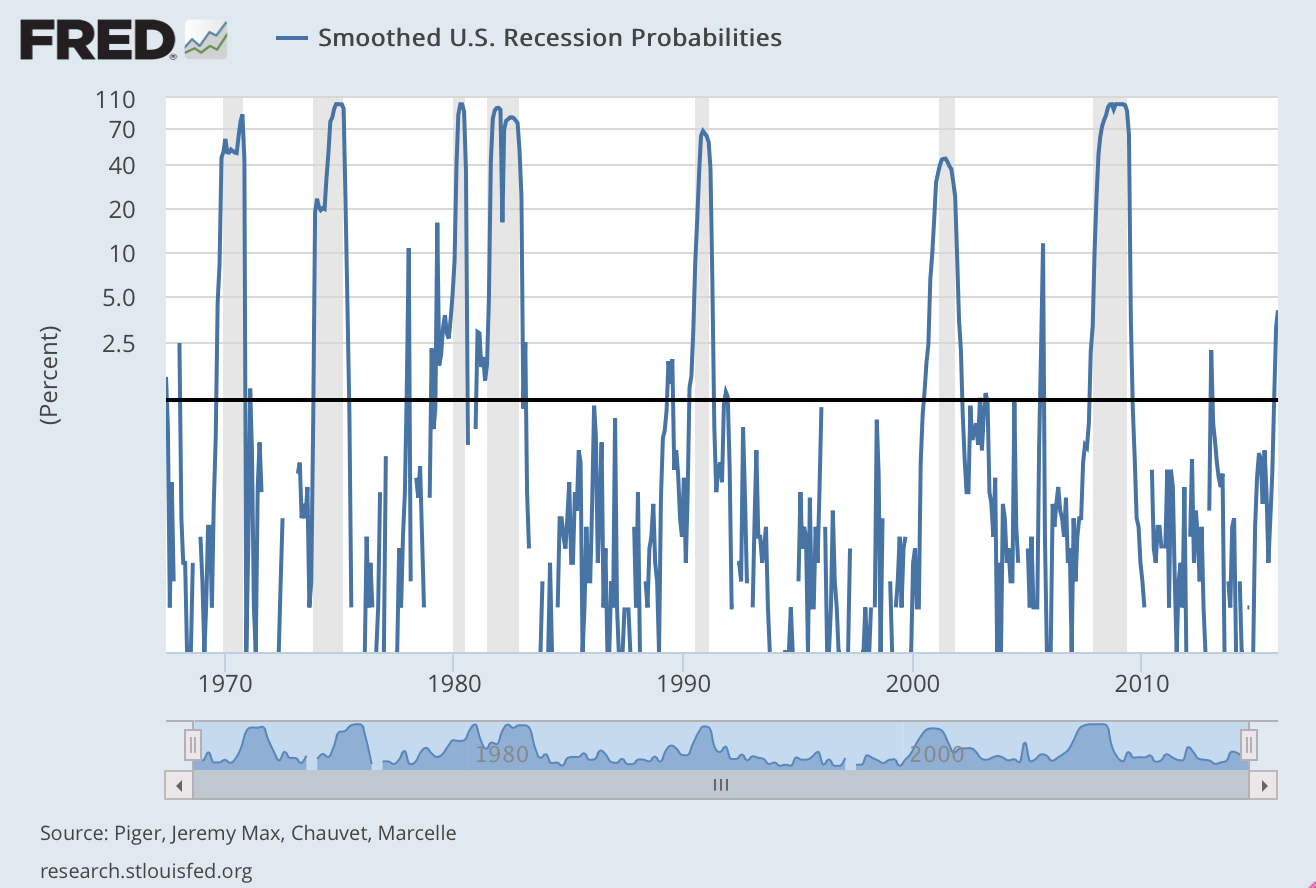
First, the threat of a recession albeit low is much higher than what we have seen in years. I have taken the St Louis Fed recession probability model estimates and changed the values to logs. This will place more roughness in the low probability numbers. It is nice way to look at the marginal changes in probabilities. The readings are certainly not close to Jim Rogers "100%" recession comment this week, but the threat is real and certainly more than what we have seen since the last recession. 

Second, I look at the financial stress indices produced by different Fed banks. Below we show the Cleveland Fed numbers. That number shows a heightened level of stress although it looks like we have reached a local maximum. Financial stress is subjective and not part of the Fed's policy mandate but if the Fed is interested in systemic risk management, it should be watching these numbers.


The Fed is likely to err toward caution on any March action. This expectation has been good for the stock market, but expectation that we will see any above trend growth in the US should be tempered. Making any major allocation changes based on the idea that a slight policy delay is strongly equity positive is also dangerous.